













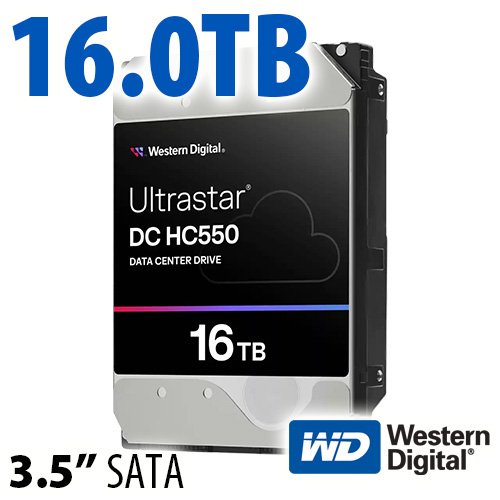
$220 SAVE $130 = 37.0% Western Digital 16.0TB Western Digital Ultrastar DC HC550 3.5-in… in Storage: Hard Drives
|
|

|
|

|

|
Optical Performance

Related: apochromatic, Coastal Optics, Coastal Optics 60mm f/4 UV-VIS-IR APO-Macro, diffraction, macro, optics
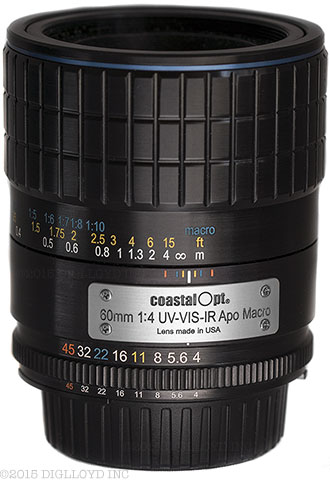
Full review of the Coastal Optics 60mm f/4 UV-VIS-IR APO MACRO is found in DAP.
This page discusses overall optical performance.
MTF (modulation transfer function)
The Coastal 60/4 is diffraction-limited by f/8 across the UV-VIS-IR spectral band, except at infinity, where aberrations requires f/8 to sharpen the edges and corners.
A few exotic lenses approach this level of performance, such as the Leica 300mm f/4 APO or the 90/2 APO Summicron-R or the 180/2.8 APO-Elmarit-R, but none of them can do so outside the visible light range.
Update May 2012: the Coastal 60/4 shows some weakness until f/8. This is easily observed on cameras like the Nikon D3x or Nikon D800. This is unfortunate because f/5.6 is already limiting peak performance on the 36-megapixel Nikon D800.
The coma and oblique spherical disappear quickly on stopping down, which is why performance in the extreme corner suddenly gets great at f/8. If the problem were truly field curvature then the improvement would be much more gradual.
MTF at infinity, visible light (400 - 700nm), f/4, f/5.6, f/8
Wide open at f/4, MTF is excellent, indeed outstanding in the center, dropping off gracefully into the extreme corners. Conventional lenses stopped down 2-3 stops might show somewhat better performance in the corners in most of the visible light range, but most will also show chromatic errors that are not seen with the Coastal 60/4. One stop down at f/5.6 the 60/4 offers world-class performance; stopping down just 1/3 or 2/3 stop from f/4 yields most of this improvement. HOWEVER, shooting at infinity focus shows field curvature that demands f/8 for sharpness to the extreme corners. The MTF graph doesn’t show this, and my sample was hand-tuned by Coastal.
More important for many subjects will be depth of field, which makes f/8 the optimal aperture for overall results in practice. While a graph for f/11 is not available, diffraction can be expected to reduce performance noticeably.

MTF at infinity for UV & IR, at 1:2 for visible light
Performance in the UV band is simply outstanding, and still outstanding in the infrared band, though slightly lower due to diffraction, which degrades performance with longer wavelengths.

Chromatic aberrations and distortion
This level of chromatic correction is extremely difficult to achieve, which explains why the Coastal 60/4 uses so many fluorite elements, which are expensive (and even the supply of calcium fluoride glass is limited).
Distortion is extremely well controlled for a 60mm lens.

Relative illumination and spectral transmission
See the Spectral Transmission page for more on spectral graphs. Vignetting is minimal, an excellent performance by f/5.6, the optimal aperture.


Seagate 22TB IronWolf Pro 7200 rpm SATA III 3.5" Internal NAS HDD (CMR)
SAVE $100