















|

$220 SAVE $130 = 37.0% Western Digital 16.0TB Western Digital Ultrastar DC HC550 3.5-in… in Storage: Hard Drives
|

|

|
|

|
Diffraction Example Using 21MP Canon 1Ds Mark III

Related: apochromatic, Canon 1DS Mark III, depth of field, diffraction, Leica Elmarit and Elmar, Leica Elmarit-R and Elmar-R, Leica R lenses
Updated: December 15, 2007
This article is a companion article to Diffraction—A Technical Challenge and Diffraction—A Real-world Example. For further thoughts on aperture, depth of field and diffraction, be sure to read those two articles; this article presents examples only.
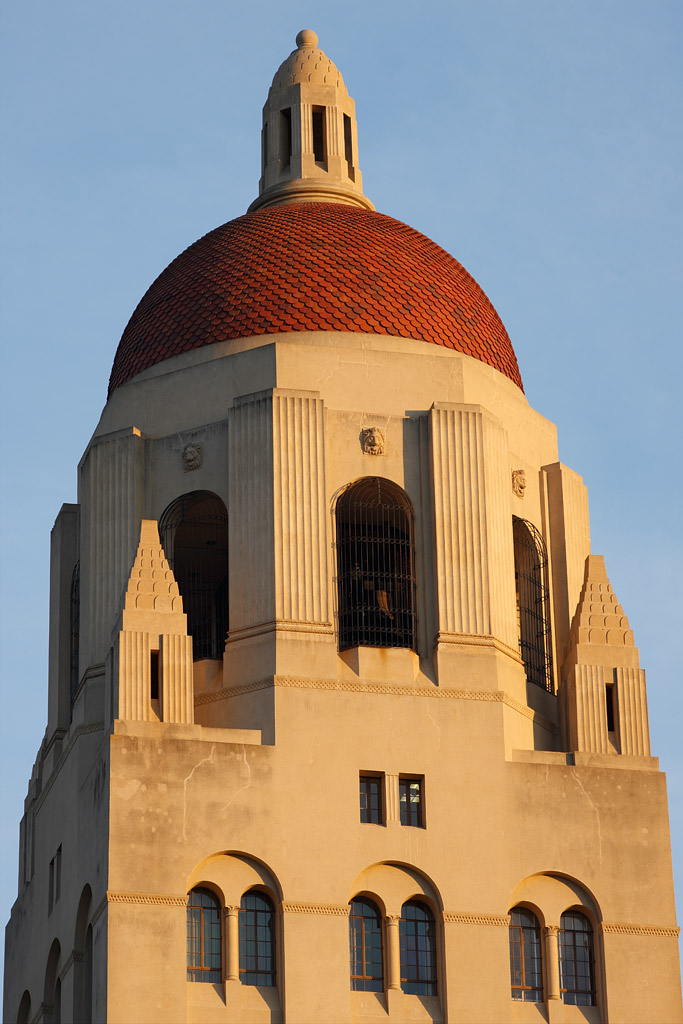
The 6.4-micron photosites of the 21-megapixel Canon EOS demand very high resolving power from lenses, resolving power that most lenses can deliver at some apertures over some portion of the frame, but that few can deliver with more than modest contrast.
This examples uses the world-class Leica R 180/2.8 APO-Elmarit-R, widely regarded as one of the finest lenses available today. The diffraction examples seen on this page represent the worst case; many lenses might not show the same differences because they simply cannot “deliver the goods” as the 180/2.8 APO-Elmarit-R can.
Example
Please see Diffraction—A Technical Challenge and Diffraction—A Real-world Example for background information on diffraction, aperture and depth of field.
Mousing over each image shown below will switch to the next smaller aperture (eg mousing over the f/2.8 image will switch to f/4, Javascript must be enabled). Alternately, view the images separately.
Aperture series
A nice improvement in contrast is seen by stopping down from f/2.8 to f/4. As good as the Leica lens is, it’s definitely not diffraction-limited at f/4, as one might hope.
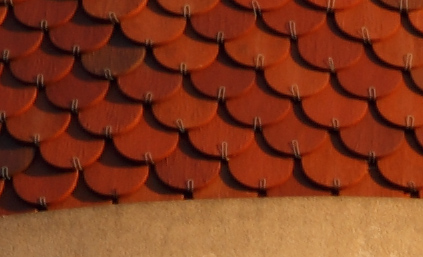
Micro detail picks up slightly at f/5.6, which is the optimal aperture. Observe the wire hoops, the detail in the stonework and tiles.
Aperture f/8 shows clear signs of contrast loss; the small wire loops go slightly soft and the fine detail in the stonework loses its crispness.
Aperture f/11 continues the trend which started at f/8: contrast and crispness decline a little more.
At aperture f/16, image quality holds up remarkably well, but contrast is now visibly reduced; the image has lost its “punch”, is visibly soft and detail has “gone missing”. Don’t stop down to f/16 on the EOS 1DsM3 unless increased depth of field outweighs the negatives.
To see how much has been lost at f/16, compare f/16 to f/5.6; sharpening is not going to bring the detail back (it’s gone).
Conclusions
With a top-performing lens on the 21-megapixel Canon EOS 1Ds Mark III, the negative effects of diffraction can be seen as early as f/8, with f/5.6 being the last (whole) aperture providing optimal image quality.
Any allegedly objective comparison of maximal image sharpness of the Canon EOS 1Ds Mark III to its peers (EOS 1Ds Mark II, EOS 5D, Nikon D3) is misleading if the aperture used is smaller than f/5.6 (on a top-performing lens). While f/8 is just barely defensible, comparing results at f/11 and f/16 is absurd if the goal is to actually see what the 1DsM3 can produce under optimal conditions. Comparisons at smaller apertures are still worthwhile, so long as one does not make conclusions about optimal image sharpness with the 1DsM3.
Few lenses are going to perform as well as the Leica R 180/2.8 APO-Elmarit-R. It might well be that f/8 or even f/11 will in fact be optimal on the 1DsM3 due to optical shortcomings of less impressive alternatives.

Seagate 22TB IronWolf Pro 7200 rpm SATA III 3.5" Internal NAS HDD (CMR)
SAVE $100